$400,000,000
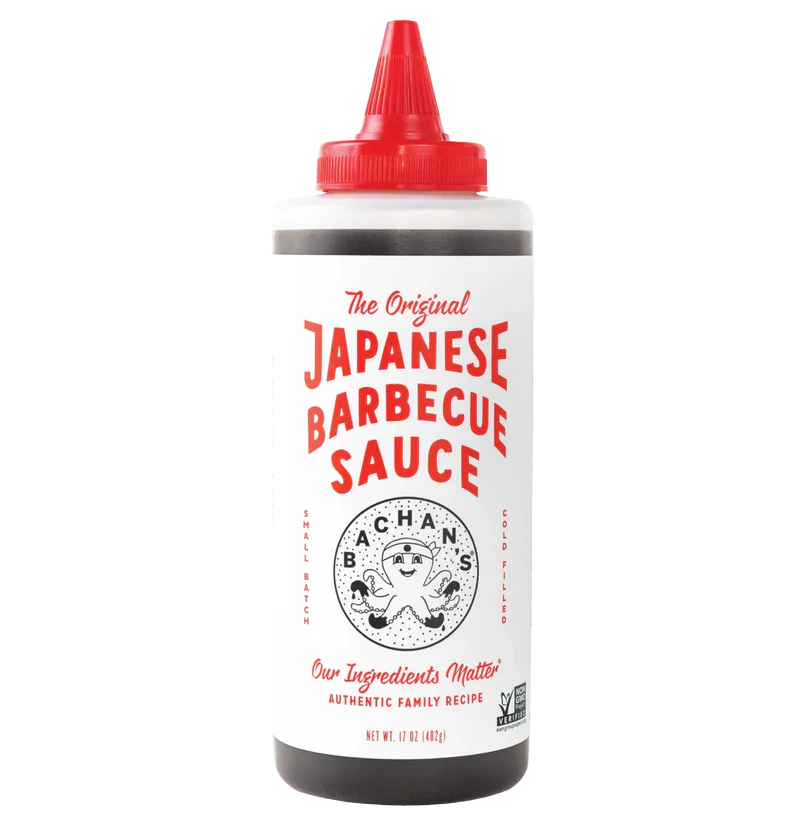
That's the price Marzetti paid for a barbecue sauce company in February 2026.
That's the price Marzetti paid for a barbecue sauce company in February 2026.
The Origin
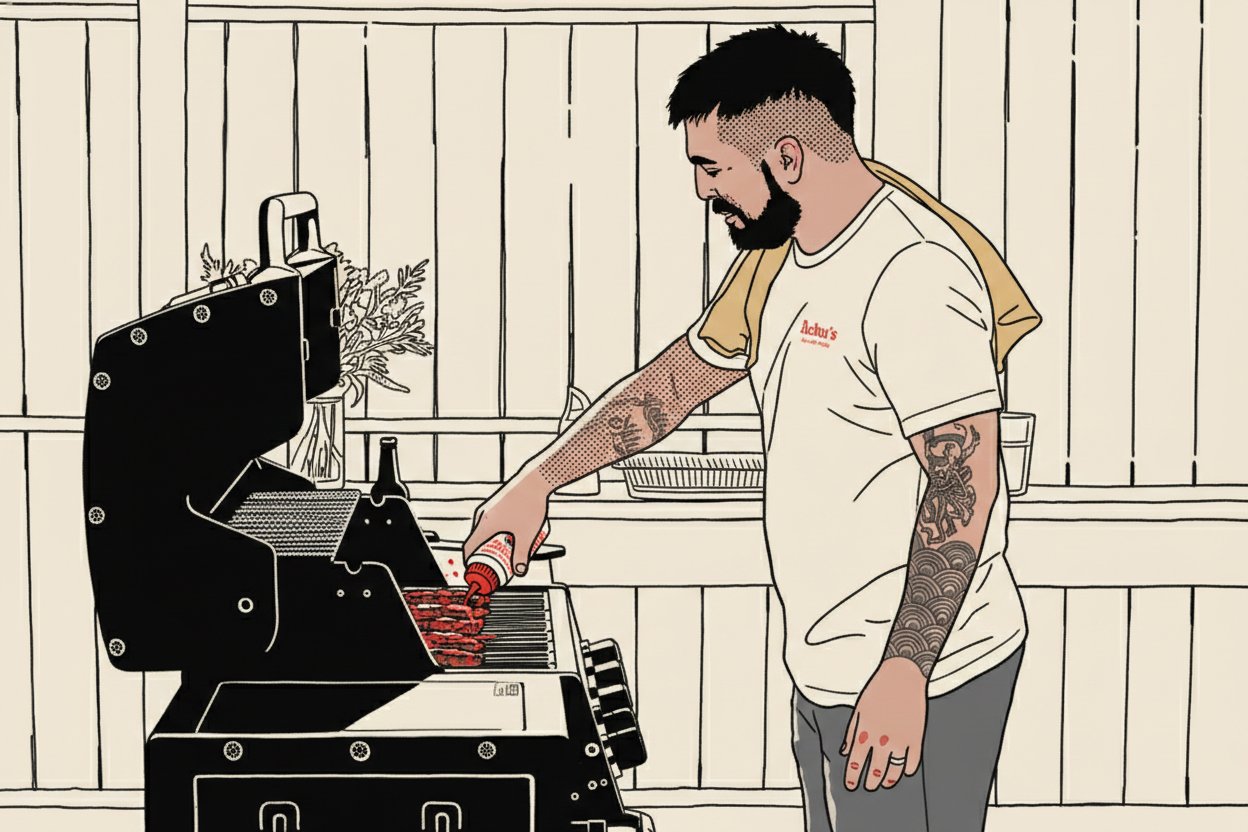
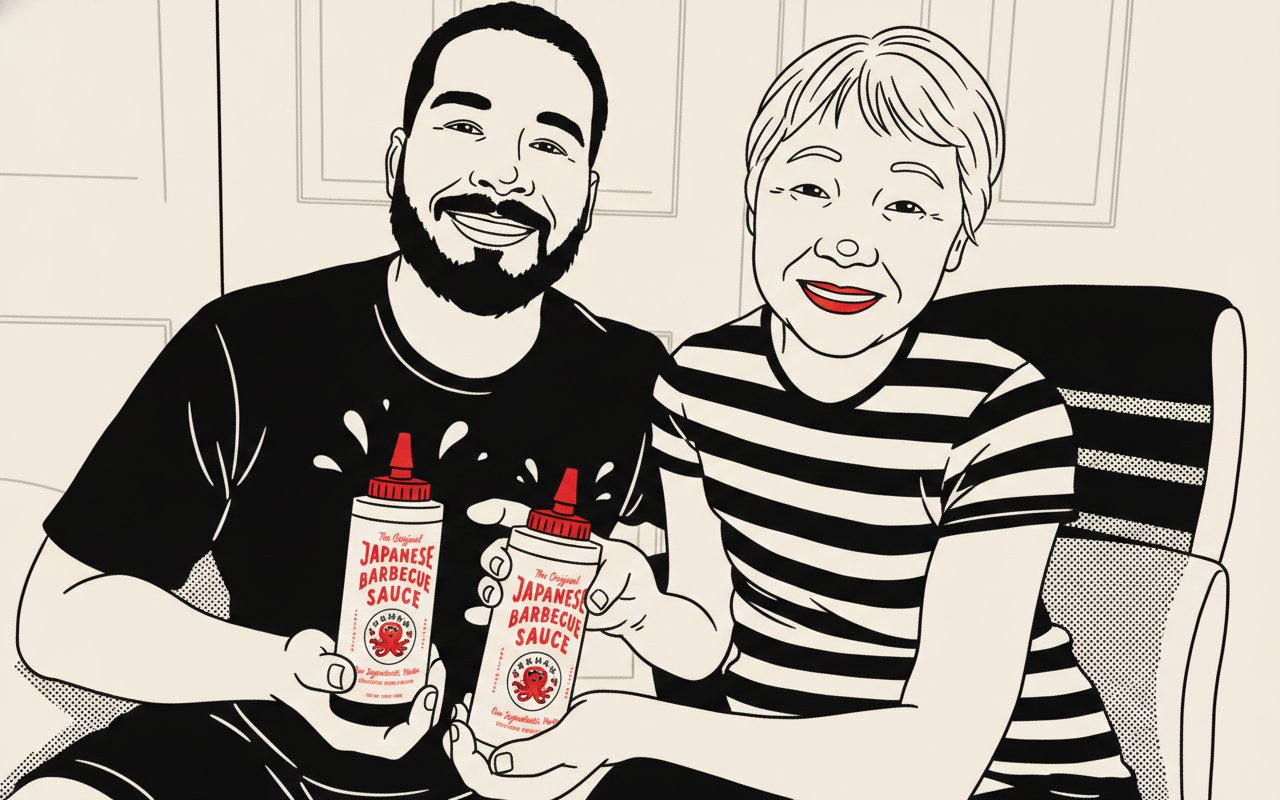
Justin Gill grew up in the Bay Area eating his grandmother's sauce at every family gathering. She called it her barbecue sauce. It was technically tare, a Japanese dipping and glazing sauce made with soy, mirin, ginger, and garlic, but in the Gill household, it was just the sauce.
In 2013, Gill started trying to bottle it. He was a landscaper with no food science background, no industry connections, and no money.
The Struggle · 2013–2019
Co-packer: "Your ingredients don't matter. Use our standard formulation."
Gill's response: refused. Trademarked "Our Ingredients Matter."
Six years and 49 iterations. Gill insisted on cold-filling the sauce (no heat pasteurization) because cooking at standard temperatures destroyed the fresh ginger, garlic, and mirin. He borrowed from family, maxed credit cards, took loans with daily compounding interest. According to Bloomberg Businessweek, Prelude Growth Partners initially offered $10 million. Gill turned it down to keep control and took a restructured $4 million deal instead.
The Launch & Rocket
He launched in 2019, selling direct-to-consumer through Facebook ads, then Amazon. By 2020, Bachan's was the number-one selling BBQ sauce on the platform, capturing 22% of the entire category, more than Sweet Baby Ray's, the dominant brand in American barbecue sauce.
The pandemic turned every kitchen into a test kitchen. Retailers came calling. 2,500 doors became 10,000, then 25,000. Walmart gave Bachan's 4,000 locations in the mainstream condiment set. By 2025, the brand was doing roughly $87 million in net sales.
The Exit



Another entry in the premium condiment acquisition wave: Cholula to McCormick, Rao's to Campbell's, Siete to PepsiCo. Visionary founder, authentic recipe, cultural tailwind, big exit. A clean narrative. And every fact in it checks out.
That's the story. It's true, and it's incomplete.
If the answer is great product plus great timing, then every brand with both should have won. Most didn't.
The Comparison
| Bachan's | Soy Vay | Mr. Yoshida's | |
|---|---|---|---|
| Product | Soy, mirin, ginger, garlic sauce | Soy, ginger, garlic, sesame sauce | Soy-based Japanese sauce |
| Heritage | Japanese-American family recipe | Jewish-Chinese cross-cultural recipe | Family recipe |
| US Presence | Since 2019 | Since 1982 | Since the 1980s |
| Outcome | $400M acquisition | Acquired by Clorox, 2011. Still in Asian aisle. | Acquired by Heinz. ~$20M peak sales. Still in Asian aisle. |
Soy Vay has sold a sauce made from soy, ginger, garlic, and sesame since 1982. Mr. Yoshida's has had a nearly identical product on shelves even longer. Real ingredients, cross-cultural origin stories, flavor profiles that could pass for Bachan's in a blind test. Both brands achieved national distribution. Both were acquired by major corporations. Both hit eight-figure revenue. And both stayed in the Asian foods aisle.
One product category. Three decades. Three wildly different outcomes.
Same product category. Same decades. The difference was where each one sat in the store.
To understand how, start with the grocery store itself.
A grocery store looks neutral. Aisles, shelves, products, a container for commerce.
It's a traffic system, and where you sit in it determines whether you grow or stall.
The Traffic System
Some zones are highways where every shopper passes through. Some are side streets. Some are cul-de-sacs: you only go there if you already know what you need.
Two zones in one building, with completely different economics. A product in the impulse zone competes on interest, "that looks good, I'll try it." A product in the destination zone competes on specificity, "is this the exact soy sauce I came for?"
Interest allows premium pricing and creates new customers. Specificity invites comparison shopping and only serves existing ones.
The Revenue Ceiling
Aisle placement is a revenue ceiling. A Japanese sauce in the International aisle can only sell to people who already know they want a Japanese sauce. That's a small group, and it barely grows. Soy Vay lived here for over forty years, even after Clorox acquired it.
People already liked the taste of tare. The problem was that most shoppers would never walk down the aisle where it lived.
So what would happen if someone took that product out of the destination zone ,
and moved it to where people actually shop for dinner?
The Problem
This is tare. You've seen the brands that sold it. People who try it tend to like it. Yet it sat in a low-traffic aisle under a name most shoppers couldn't parse, in a format that coded as specialty.
Gill took an existing product and moved it to where it could actually be found. Three moves, in sequence.
Arbitrage #1: Rename
"Tare" means nothing to a grocery shopper scanning the condiment aisle. "Japanese Barbecue Sauce" means everything. "Barbecue" told the category manager where to shelve it. "Japanese" told the shopper why it was different from what was already there.
The name needed a bridge. Tare is sweeter than barbecue, more umami, with no smoke. So Gill added one ingredient to the traditional recipe: tomato paste. Just enough to connect Japanese savory to the acidity that barbecue implies, making the label feel true on the tongue.
What Consumers Actually Use It For
Consumers don't actually use it as barbecue sauce. Look at the reviews: "turbo soy sauce," "one-bottle shortcut for rice bowls," "better teriyaki." Some explicitly warn against grilling with it, the sugar content chars and burns.
The name was a shelf strategy. "Barbecue" got the product in front of high-traffic shoppers. The flavor (sweet, umami-forward, endlessly versatile) is what made them come back.
Arbitrage #2: Relocate
Sweet Baby Ray's dominates the BBQ sauce shelf, roughly half of American consumers name it their favorite. A new entrant asking a category manager for space in that set gets laughed out of the meeting.
Bachan's showed up with data instead. The brand had already become the top-selling BBQ sauce on Amazon, outperforming every legacy competitor by dollars per store per week in the natural channel. That velocity data became the permission slip. It told category managers: "The demand already exists. You're just not capturing it yet."
Arbitrage #3: Repeat
A glass jar lives in the pantry. You take it out when a recipe calls for it. A squeeze bottle sits on the table, you grab it, drizzle, done. The format change turned a "recipe ingredient" into an "everyday condiment" and made the consumer a heavier user.
The Three Arbitrages
"Soy-based Japanese sauces are ethnic specialty products."
That was the quiet assumption (a retailer convention, invisible to shoppers) that had determined where these products lived for decades. Bachan's bypassed it so cleanly that the consumer never noticed a category switch had happened. They just thought: "Huh, interesting BBQ sauce."
The Compounding Flywheel
Each step made the next one possible. None of them worked in isolation. The name change without the shelf move is a branding exercise. The shelf move without the squeeze bottle is a trial with no repeat. The squeeze bottle without a flavor worth coming back for is a habit that decays. Together, they compounded, and each rotation of the cycle generated data that made the next rotation easier.
The Cold-Fill Moat
Fresh ginger, garlic, and mirin cook away → the fresh flavors are destroyed → dehydrated substitutes + xanthan gum to compensate
Fresh ingredients stay vibrant → ginger, garlic, mirin retain flavor → you taste the difference because nothing was cooked out
Hot-fill is the entire industry's infrastructure: billions of dollars in production lines built around high-temperature processing. You can't retrofit a hot-fill line for cold-fill; you need different equipment, different sanitation, different supply chains. No incumbent is going to rebuild a factory to compete with one brand in one subcategory. The moat is economics: anyone can copy the recipe, but rebuilding the production process costs more than the market opportunity is worth.
The Copycats Confirm the Thesis
The copycats are the proof. Kinder's launched a "Japanese BBQ" line. Aldi followed. Both used the same shelf name, the same aisle, the same squeeze format. They copied every visible move. What they couldn't copy was the cold-fill process, and the taste difference shows in the reviews.
The Contradiction
What happened in those eight months?
Four Structural Walls
The flywheel that built the brand couldn't solve what came next. Each wall alone is manageable. Stacked together, they changed the math entirely.
Why Marzetti
Marzetti is a foodservice machine, the invisible operator behind the sauce packets at fast-food chains, the dressings at casual dining restaurants, the dips in convenience stores. It has manufacturing scale, cold-chain logistics, and tens of thousands of restaurant relationships where Bachan's could appear without a single new distribution deal. Every structural wall Bachan's was facing, Marzetti had already built roads through.
The Fork
Gill had won the shelf war. But the next phase (foodservice, industrial-scale manufacturing, defending against copycats with deeper pockets) required assets he'd never built and couldn't build fast enough. The longer he waited, the more the position eroded. So he sold at the peak of the position's value, to a buyer that already had the factories, the cold chain, and the restaurant relationships.
The job was misplaced.
People had liked this flavor for decades. They just couldn't find it: wrong name, wrong aisle, wrong bottle. One brand fixed all three.
None of this was inevitable. A different name and it stays in the International aisle. A different format and trial stalls after one purchase. A different read on the market and the founder holds on too long, watching copycats erode the position month by month. What makes the Bachan's story unusual is the sequencing, each move made at the right time, in the right order, by a founder who sold at peak leverage instead of waiting for the next phase to eat it.
Sources
The Number / Context
Acquisition price, revenue, and deal terms: T. Marzetti Company SEC Form 8-K, February 3, 2026; BusinessWire press release, February 3, 2026.
Total outside funding ($17M): Gill interview, Press Democrat, September 2022; confirmed February 2026.
Founder background (landscaping, Cal Poly SLO): The Org; ZoomInfo; Cal Poly alumni records.
49 recipe iterations, cold-fill development: Gill interview, Bristol Farms "Meet the Maker," 2023.
Act 1: The Story You've Heard
Grandmother Judy Yokoyama, family origin: Bachans.com brand story.
Co-packer refusal, "Our Ingredients Matter" trademark: Gill interview, Sawtooth Group podcast, 2023.
Personal debt, credit cards, daily compounding loans: Sarah Halzack, "The Sauce Boss," Bloomberg Businessweek, May 27, 2025.
Prelude Growth Partners $10M offer, restructured $4M deal: Bloomberg Businessweek, May 27, 2025; confirmed via Prelude Growth Partners repost.
Amazon #1 BBQ sauce, 22% category share: Jungle Scout Cobalt marketplace data, 2020-2023.
4,000+ Walmart locations: Bachan's press release via Nosh, May 2023.
25,000+ retail doors: Nosh, 2023 (20,000+); Ainvest, 2025 (25,000).
$87M trailing net sales: Marzetti SEC 8-K filing, February 2026.
Act 1: Comparable Acquisitions
Cholula → McCormick, $800M, November 2020: McCormick press release.
Rao's (Sovos Brands) → Campbell's, $2.7B, March 2024: CNBC; Campbell Soup press release.
Siete → PepsiCo, $1.2B, October 2024: CNBC; PepsiCo press release.
Act 2: The Comparison
Soy Vay founding, Eddie Scher origin story: "Veri Veri Teriyaki is saucy success," SFGate, January 24, 2003.
Clorox acquisition of Soy Vay Enterprises (December 31, 2011): Clorox Company SEC 10-Q filing; Mergr transaction record.
Mr. Yoshida's history, Heinz acquisition, founder buyback: Forbes profile; Tapas Magazine.
Product comparisons and ingredients: Soy Vay and Mr. Yoshida's brand archives; product labeling.
Acts 3–4: The Aisle / The Move
Grocery store traffic patterns and zone economics: Editorial framework based on standard retail trade literature; not sourced to a single study.
Sweet Baby Ray's consumer preference (~48.6%): Mashed / Yahoo consumer survey.
Tomato paste as bridge ingredient: Bachan's Original Japanese Barbecue Sauce ingredient panel.
Consumer use cases (rice bowls, marinades, not BBQ): Amazon review analysis; community discussion on Reddit, Chowhound, and product forums.
Act 5: The Proof
Cold-fill vs. hot-fill processing temperatures: FDA guidance on acidified foods; industry standard operating procedures.
Copycat products (Kinder's, Burman's): Product labeling and retail shelf observation. Prices approximate at time of writing.
Act 6: The Ceiling
"No plans to sell anytime soon," revenue trajectory: Bloomberg Businessweek, May 27, 2025.
Marzetti foodservice portfolio (Chick-fil-A, Buffalo Wild Wings, Subway, Arby's, Texas Roadhouse, Olive Garden, Sister Schubert's): BusinessWire press release, February 2026; CBS News; Marzetti corporate filings (FY2024 foodservice revenue: $883M).
A scrollytelling case study