The Asia Aisle

Skin Deep

How Flower Knows entered America without answering the question every Asian brand gets asked

On December 7, 2025, a Chinese beauty brand launched on Ulta.com with 62 products across five collections. It had never bought a paid advertisement in the United States. 171,000 TikTok posts had been made about it by American consumers, the overwhelming majority with no confirmed paid arrangement. One beauty creator's unpaid video collected 1.6 million likes.1

The brand is called Flower Knows. The compacts are sculptural, encrusted with carved roses, finished to look like objects from a world that does not exist on any map. In a coded sample of several hundred identifiable US consumer reviews and posts, four percent mention that the brand originates in China.2

What follows is an examination of how that happened, what the consumer data reveals underneath it, and what the brand must now do to stay where it has arrived.

SCROLL TO BEGIN

Movement One
The
World

Origin

Yang Zifeng and Zhou Tiancheng spent roughly a decade performing as Baozi and Hana on the competitive cosplay circuit across East Asia. The work required makeup that could survive hours of stage lighting, hold precise character detail in photographs, and be worth looking at as an object in its own right. What was commercially available did not reliably do all three. In 2016, working out of Hangzhou with approximately $140,000 in starting capital, they began making their own.3

Yang Zifeng and Zhou Tiancheng in cosplay as characters from Hana no Mizo Shiru
Yang Zifeng and Zhou Tiancheng as characters from Hana no Mizo Shiru, the manga the brand was named for · Source: founders' personal archive

The first customers were cosplayers they already knew personally: people who attended the same conventions, trusted the founders directly, and understood exactly what the product was trying to solve. Within three months the brand had reportedly generated roughly twice its starting capital in transactions. By 2019, having pivoted toward a broader consumer aesthetic, annual sales exceeded $3 million. Institutional investors arrived in 2020. A Series A in 2021 valued the company above $140 million.4

The brand name is a reference to a Japanese boys-love manga, Hana no Mizo Shiru (Only the Flower Knows), which the founders had famously cosplayed. The original community that built Flower Knows experienced it not as a market entry but as something made by people they already loved, for reasons they already understood.

The Strategy

Between 2019 and 2022, the packaging vocabulary expanded beyond cosplay into Rococo scrollwork, Victorian lace, European ballet, fairy-tale illustration. Every collection is built around a distinct themed world: Swan Ballet, Shell's Jewel, Strawberry Cupid, with compacts, lip products, and accessories that cohere around a single visual universe. Each collection requires custom steel molds commissioned specifically for it. The Little Angel series required three to four sets of exclusive molds, each costing over $140,000.5

The result is packaging that no competitor at the same price point can easily replicate, not because the aesthetic is patented but because the capital expenditure required to produce it at this quality is prohibitive for a fast-beauty entrant: a new collection every two to three months, a mold investment that absorbs costs competitors avoid entirely. The packaging became the brand's marketing: it produced the content, the unboxing genre, the scroll-stopping creative, without a media budget.
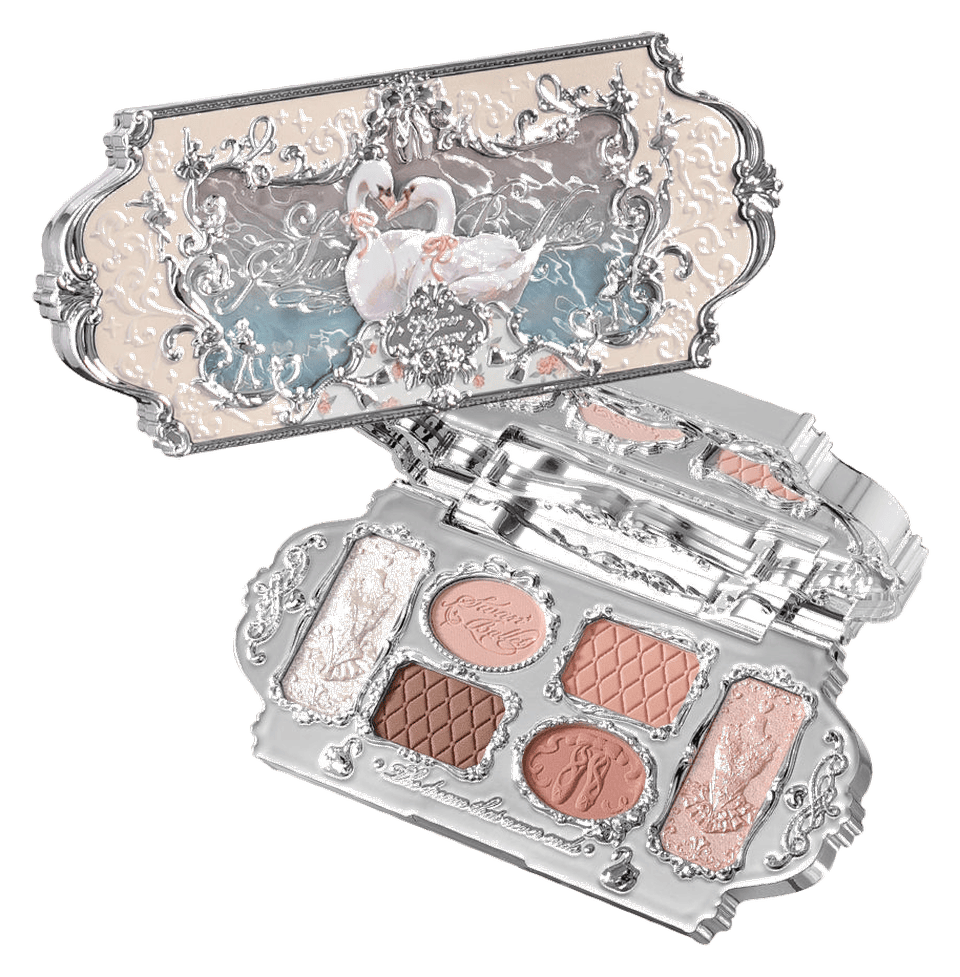
Swan Ballet eyeshadow palette by Flower Knows, open, showing carved Rococo lid and pressed powder pans
Swan Ballet eyeshadow palette · Flower Knows · Custom steel molds commissioned per collection; each set exceeding $140,000

The resulting aesthetic has no fixed national or cultural address. It borrows from European decorative traditions, Japanese illustration, and fairy-tale imagery from no specific cultural origin. In a coded sample of several hundred identifiable US consumer reviews and posts across TikTok, Instagram, Amazon, Ulta, and the brand's own channel, four percent mention Chinese origin at all.2 The Swan Ballet compact bypasses the question of where it was made entirely; what it triggers instead is the question of where it came from, and the answer is a world that does not exist.
2016
~$300K
2019
$3M ●
2020
$14M ●
2022
$31M ●
2023
~$66M ○
2025
$140M+ ○
2016 ~$300K 2019 $3M 2020 $14M 2022 $31M ● 2023 ~$66M ○ 2025 (proj.) $140M+ ○ ● Confirmed 6+ sources   ○ Inference / projection   USD · Source: CBNData, CMO presentation, Hangzhou municipal data, EqualOcean
Movement Two
The
Predecessors

What Came Before

Before Flower Knows, five brands carried a similar proposition into American beauty retail: ornate packaging, devoted following in Asian markets, fantasy aesthetic, accessible price point. The record is uniform and worth examining in detail, because it defines the category's failure mode.

Majolica Majorca · Shiseido · 2003

Gothic fairy-tale packaging, wide Asian distribution. Shiseido assessed the US subcultural audience for this aesthetic as too narrow and built its American portfolio instead through acquisitions: NARS, bareMinerals, Laura Mercier, Drunk Elephant, without mounting a US mainstream attempt for the aesthetic brand it already owned.6

Anna Sui · US launch mid-2000s

Held Sephora placement through the mid-2000s. Retreated when Sephora shifted toward clinically backed skincare. Now sells through Beautylish, Amazon, and Nordstrom with approximately 13,000 US Instagram followers.7

Paul & Joe · DTC and specialty

Cat-shaped lipsticks generated substantial social media content, but the brand never entered major American retail and remains a specialty import purchase.7

Jill Stuart Beauty · Kosé license · US 2018

Launched with over 100 influencer partnerships. Closed its American operation by 2025, redirecting consumers to Kosé's other brands.7

Canmake · MINISO and Amazon

Watched ColourPop license the Sailor Moon IP (the same aesthetic register Canmake had occupied) and sell out in thirty minutes through domestic channels, leaving Canmake relegated to import status.7

The consistent pattern is this: the aesthetic attracted trial, the formula did not sustain repurchase, and American specialty retail moved on. Each of these brands had the beautiful packaging. None of them resolved the formulation question before the window closed.

The Paradox

Kosé Corporation manufactured cosmetics for Anna Sui and Paul & Joe, licensed the Jill Stuart brand, and watched all three fail to build lasting American traction. In 2014, Kosé acquired Tarte Cosmetics for $135 million.8

Tarte was an American brand with American formulations and existing American retail relationships. Under Kosé's ownership, it grew to become the third-largest prestige makeup brand in the United States (Circana/NPD, 2023). The lesson Kosé drew from its own experience was that aesthetic fantasy, absent formulation credibility, could not produce the repurchase behavior American retail requires. The solution it found was to acquire a brand that already had it.

Kosé, which understood the aesthetic better than anyone, decided the formula problem was not worth solving. It bought Tarte instead.

Flower Knows is attempting what Kosé concluded was not worth attempting. It is doing so at a moment when cottagecore, coquette, and fairy-core aesthetics have made maximalist romanticism the dominant TikTok beauty vernacular, a timing advantage none of the predecessors had. And it has something else none of them had: a fandom that predates the product.

Movement Three
What the
Data Says

The Consumer Signal

A coded sample of several hundred identifiable consumer posts and reviews across TikTok, Instagram, Amazon, Ulta, and the brand's own channel tells a story the brand's own framing does not prepare for.

Of that sample, 67.5% of content focuses on the packaging, the unboxing experience, or displaying the product. 32.5% engages with how it performs on the face. One creator on the brand's own PR contact list told her followers she would not repurchase but would "die for the packaging." A Reddit thread arguing that the packaging exists "to overcompensate for their low quality of product" received over three thousand upvotes.9

Coded sample of 570+ identifiable reviews and posts · Amazon, Ulta, TikTok, Instagram, Reddit

TikTok · Organic · Unpaid
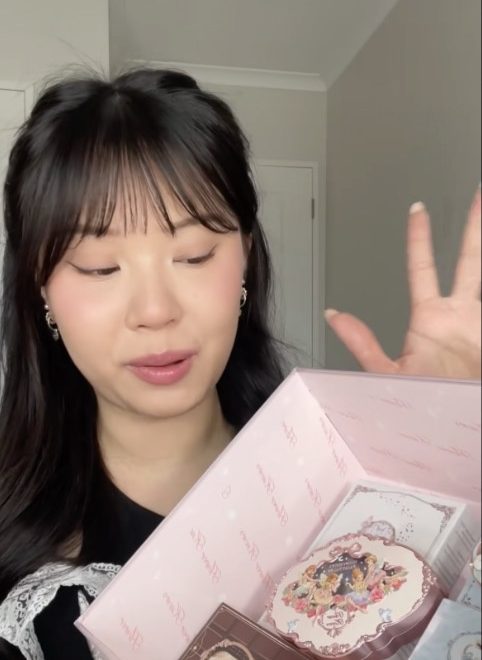
TikTok creator unboxing Flower Knows products, displayed as objects rather than being applied
Organic TikTok content · An instance of the 67.5%

Fourteen percent of traceable purchase signals are gift purchases, because these products function as objects worth giving independent of their cosmetic utility.9

The Purchase Pattern

Analysis of Amazon cross-purchase patterns suggests that for every American consumer who returns because she finished a product, an estimated thirteen return because a new collection dropped (a ratio inferred from review velocity and cross-purchase data, not directly observed).9

Inferred from Amazon cross-purchase and review velocity patterns

Pop Mart, the Beijing-based collectibles company, built a market capitalization exceeding ten billion dollars on a similar dynamic: products purchased for what they are rather than what they do.10 The distinction is where Flower Knows has chosen to sell.

Flower Knows is on Ulta.com, priced between eight and forty-five dollars, listed alongside Charlotte Tilbury and Too Faced. Ulta's category placement positions Flower Knows to be judged as a cosmetic, with the repurchase metrics cosmetics require; not as a collectible, where collection-drop returns would read as normal category behavior. The judgment Ulta applies begins with this question: do consumers finish the product and come back for more. On that measure, a customer base that is primarily responding to collection drops rather than product depletion produces a signal that looks, in Ulta's measurement system, identical to underperformance.

The Ceiling

Review data across all identified US channels shows a satisfaction rate that collapses by skin tone. The brand offers no foundation and no concealer. Setting powder comes in two shades.

8 identified mentions across dark skin tones · Zero positive signals · Small sample, directionally unambiguous

This is not an edge case in American retail. Ulta's customer base is demographically diverse and increasingly so. Zero satisfaction signals among darker skin tones represents a structural limit on the brand's addressable market, one that shade expansion can address but formulation improvement alone cannot.11

Movement Four
The
Inside

The Hierarchy

The formulation data reveals a brand whose performance is sharply stratified by product category, with a structural explanation for why the stratification exists.

Amazon, Ulta, TikTok consensus · Sources: Ulta product pages, Amazon official storefront, community reviews

The stratification is not random. Flower Knows' three-dimensional embossed packaging requires dry powder pressed hard enough to survive international shipping with the surface carvings intact. The pressure required to achieve that creates the texture some consumers describe as chalky. The failure appears structural: a chemistry problem likely produced by a packaging requirement, not a formulation deficiency independent of it.12

Liquid and cream formulations do not have this constraint. They do not need to hold a physical shape under pressure. The brand's highlighter, which uses a proprietary low-temperature dehydration process, holds a perfect five-star rating across the six Ulta reviews currently filed, with unanimous praise. Multiple independent reviewers converged on the same surprise; one described it as unlike any highlighter she had used before. The Strawberry Cupid Cake Lip Cream scores between 4.89 and 5.0 across platforms on hundreds of reviews. The formula hierarchy maps almost exactly onto which product types are structurally constrained by the packaging and which are not.12

The Direction

The brand has been routing around this constraint for three years. Between 2022 and 2025, the product mix shifted from approximately 90% dry pressed powder to roughly equal parts powder and liquid or cream formats. The direction is consistent with deliberate strategy, and the timeline is measurable.12

Source: Flower Knows formulation quality research · longitudinal analysis 2022–2025

The brand also developed US-specific upgraded formulations for the Ulta launch, with higher pigmentation than the domestic Chinese versions. The formula trajectory is deliberate and self-correcting. What it is not yet is proven at the scale and speed that Ulta's measurement system requires.12

Too Faced grew revenue substantially in the years following Better Than Sex's launch, on the back of a single mascara that became the number-one prestige mascara in the United States because it was simply the best product in its category, independent of brand identity. Flower Knows has the equivalent waiting to be marketed. Its highlighter holds a perfect five-star rating across six Ulta reviews, uses a proprietary low-temperature dehydration process, and has drawn convergent praise from multiple independent reviewers who describe the effect as unlike any comparable product, yet it is not positioned as the flagship.13 The relevant distinction is that Ulta's category placement positions the brand alongside Too Faced and Charlotte Tilbury; organic consumer discourse places it alongside Florasis, K-beauty palettes, and C-beauty rivals. The formula benchmark shifts depending on which frame applies, and the two are not reconciled in the current marketing.

Movement Five
The
Question

The Investment

In September 2025, three months before the Ulta launch, Proya Cosmetics acquired 38.45% of Flower Knows. Proya is China's largest domestic beauty company by online sales, with approximately 1.5 billion USD in 2024 revenue. Its growth rate, which had sustained 20 to 38 percent annually for six consecutive years, slowed to 7.2% in the first half of 2025. Its flagship skincare brand posted its first-ever quarterly decline. Overseas revenue was 1.3% of total.14

Flower Knows represents something Proya needs: a proof of concept for internationalization, a growth story outside a decelerating domestic market, a brand with demonstrated Western consumer pull. The investment structure reflects this. Proya explicitly stated the brand will maintain independent operations, with synergy limited to industrial and capital support. Yang Zifeng retains 42% and operational control. A Proya VP took a board seat.14

38.45%
Proya stake · Sept 2025
42%
Yang Zifeng retained · operational control
1.3%
Proya overseas revenue · 2024

Proya's strategic history with other brands follows a consistent pattern: acquire, restructure operations and supply chain, apply product development infrastructure, scale. For Flower Knows, the structure is different. The previous manufacturing partner, who had held an equity stake, exited entirely as part of the transaction. What Proya brings in their place is supply chain capability, capital for tooling and formulation R&D, and the manufacturing expertise that every predecessor lacked when the formula question was put to them.14

What to Watch

Flower Knows is currently online-only at Ulta, with no confirmed timeline for physical store rollout. The structure is consistent with how Ulta typically evaluates new digital relationships: conversion rates and inventory turn velocity typically determine whether Ulta commits physical shelf space, though no public statement from Ulta has confirmed those specific terms. The brand launched with 62 SKUs and plans three to four new collections per year through the Ulta channel.15

Physical shelf space at Ulta is the outcome that would validate the whole proposition. It is also the outcome that requires the formula question to be answered convincingly in the American market, not just the online one. Three signals will tell the story before any official announcement does.

Signal 1 · Formula trajectory
2026 collection ratings
Consistent scores above 4.5 across all product categories, including matte powders, would indicate the structural constraint is being resolved; a persistent gap between shimmer and matte products would indicate it is not.
Signal 2 · Shade range
Dark skin tone reviews, mid-2026
Whether 2026 US launches include expanded shade options is a direct test of whether the brand understands the ceiling identified in the review data. The zero-satisfaction rate among dark skin tones is not addressable by formula improvement alone.
Signal 3 · Proya reporting
Proya 2025 annual report · April 2026
The first regulatory filing to include Flower Knows financial data. Will resolve most open questions about revenue, overseas contribution, and the pace of the US investment.
Close
What It Means

Every Asian brand that has tried to cross into American mainstream beauty has had to answer the same question: where are you from, and should I trust that? It shapes shelf placement conversations and press coverage, and more consequentially, the calculation a consumer makes when she encounters an unfamiliar name on an unfamiliar product.

Flower Knows did not answer the question. It built a world so visually complete (the Swan Ballet compact, the Rococo scrollwork, the Victorian locket compact) that the question did not form. In a category full of brands defending their origin, this is the first that made the origin irrelevant by making everything else overwhelming.

That is a genuine strategic insight, applicable to any brand carrying a cultural identity into a market that is skeptical of it. Build the world completely enough and the question of where it came from becomes secondary to the question of whether you want to live in it.

But the predecessors also built worlds. Majolica Majorca built a world. Jill Stuart built a world. The world gets you trial. It does not get you the sixty-day return that keeps you on the shelf. Only the product inside the compact does that.

The formula is moving in the right direction, Proya brings the supply chain and capital that none of the predecessors had, and the fandom predates the product in a way that no amount of marketing spend can replicate. What will not last forever is the timing: arriving in America at the precise moment that cottagecore and coquette aesthetics made maximalist romanticism the dominant TikTok vernacular.

Whether Flower Knows resolves the formula question before the timing advantage fades is the only question left. The world is built and the packaging is already in the room. Now it has to perform.

Sources

  1. Mikayla Nogueira TikTok video, unpaid, 1.6M likes. 171,000 TikTok posts: Modash influencer database (31+ tracked creators). Ulta launch date: PR Newswire, December 9, 2025. Online-only status: Flower Knows US go-to-market analysis; Ulta product pages verified January 2026.
  2. 4% origin concern figure: coded sample of 570+ identifiable reviews and posts, Flower Knows US market review intelligence audit, Amazon / Ulta / TikTok / Instagram / Reddit / brand channel. Reddit yielded zero retrievable threads, itself a significant finding.
  3. Founders: Yang Zifeng and Zhou Tiancheng, known as Baozi (包子) and Hana. Celebrity cosplay couple; China-confirmed via Baidu Baike, Tianyancha, CMO interview 36Kr January 2026. Founded August 15, 2016. Starting capital ~$140,000 USD; may include angel investment. Confirmatory verification report, Pass 1.
  4. Revenue waypoints: 2019 ~$3M: HARD FACT, CBNData founder interview corroborated by 5+ independent sources. 2020 ~$14M+: CMO disclosure. 2021 ~$24M: derived from Chaileedo industry data. 2022 ~$31M: HARD FACT, 6+ independent sources consistent to the decimal. 2023 ~$66M: INFERENCE from Hangzhou Commerce Bureau municipal data. 2025 $140M+: Proya/EqualOcean projection upon Series B. Series A March 2021: Kunyan Capital, ~$14M, valuation >$140M USD (PE Daily).
  5. Custom mold strategy: National Business Daily, December 1, 2020. Little Angel series: 3–4 exclusive mold sets, each exceeding $140,000 USD. Flower Knows verification research plan.
  6. Majolica Majorca: Shiseido brand history. US portfolio acquisitions: NARS (1999), bareMinerals (2010), Laura Mercier (2016), Drunk Elephant (2019). Subculture to mainstream brand analysis.
  7. Anna Sui: Sephora exit, current channels confirmed via Beautylish/Amazon/Nordstrom product pages. 13,000 US Instagram followers: verified February 2026. Paul & Joe, Canmake, Jill Stuart: Packet 7A competitor claims verification. Jill Stuart US closure: Glossy, 2025. Canmake/ColourPop Sailor Moon: License Global; ColourPop collaboration statements.
  8. Tarte acquisition: Kosé Corporation earnings reports; WWD acquisition coverage. $135M purchase price, 2014. Tarte #3 prestige makeup US: Circana/NPD. Packaging gets trial, formula gets loyalty research.
  9. Review audit methodology: coded sample of 570+ identifiable reviews and posts. 67.5% / 32.5% split: Flower Knows digital ethnography. "Die for the packaging" creator quote, Modash-tracked creator. Reddit thread 3,000+ upvotes: r/AsianBeauty, verified. 14% gift purchase signal: retention analysis cross-purchase data. 13:1 ratio: Amazon review velocity and cross-purchase recommendation graph analysis; figure is inferred, not directly observed.
  10. Pop Mart market capitalization: HKEX filings, 2024. Flower Knows and fantasy commerce structural analysis.
  11. Skin tone satisfaction data: coded review audit, all identified US channels. Eight identifiable mentions across dark skin tones, zero positive signals. Small sample; directionally unambiguous. No foundation or concealer offered; two setting powder shades confirmed on Ulta product pages, December 2025. US market review intelligence audit.
  12. Formula hierarchy ratings: Little Angel highlighter 5.0★ Ulta (6 reviews); Strawberry Rococo blush 4.8★ Amazon (235 reviews); Cake Lip Cream 4.89–5.0★ cross-platform (200+ reviews); Shell's Jewel palette 4.6★ Amazon (113 reviews); Little Angel palette 3.8★ Ulta. Formulation quality longitudinal analysis. Powder-to-liquid shift: 90/10 (2022) to 85/15 (2023) to 70/30 (2024) to 50/50 (2025). US-specific upgraded pigmentation formulations: Flower Knows US market review intelligence.
  13. Too Faced Better Than Sex mascara: #1 prestige mascara Circana/NPD. Revenue growth post-launch: Estée Lauder Companies SEC filings (acquisition at $1.45B, 2016). Highlighter praise: multiple independent beauty blog reviews, verified cross-platform consensus.
  14. Proya Series B: EqualOcean September 3, 2025; Chaileedo; Proya SHE:603605 disclosures. 38.45% stake via Proya (Hainan) Investment Co. Yang Zifeng retains 42.08%. Proya VP Jin Yanhua board seat. Proya 2024 revenue $1.5B, net profit ~$220M, gross margin 71.4%. H1 2025: revenue growth +7.2% vs prior +37–38%; flagship Proya skincare -0.08% first-ever decline. Overseas revenue ~$20M (1.3% of total). Unit economics Packet 3; Proya strategic calculus analysis.
  15. Online-only status and no confirmed physical rollout: US go-to-market analysis; Ulta product pages verified January 2026. 3–4 collections per year at Ulta: Beauty Packaging Magazine December 15, 2025; Personal Care Insights January 2026. 62 SKUs, five collections: PR Newswire December 9, 2025. Proya 2025 annual report expected April 2026: first regulatory filing to include Flower Knows financial data.